
The DJs
Nobody here was assembled by a focus group. Click a photo for a bigger one.
On the Schedule
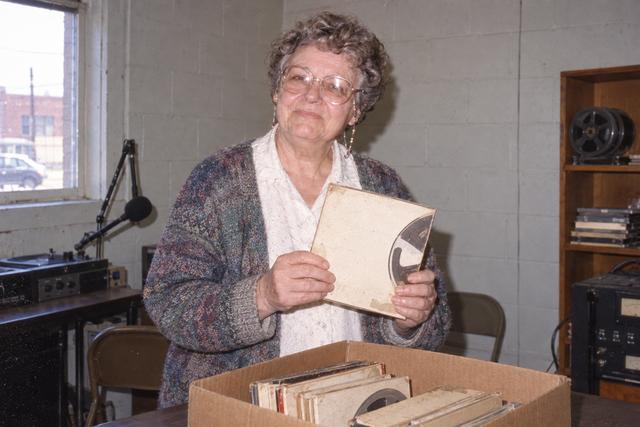
Somebody's estate sale, left at the front door. She already knows what's on every reel. |
Agnes Nowak“If you've heard of it, I've already moved on.” Field recordings, outsider music, private-press oddities from estate sales, early tape experiments, and polka, about which she is militantly unironic. A retired reference librarian who has heard everything and moved on. "This is a man in Indiana singing to his furnace. It's in D." She is not joking. It is in D. |
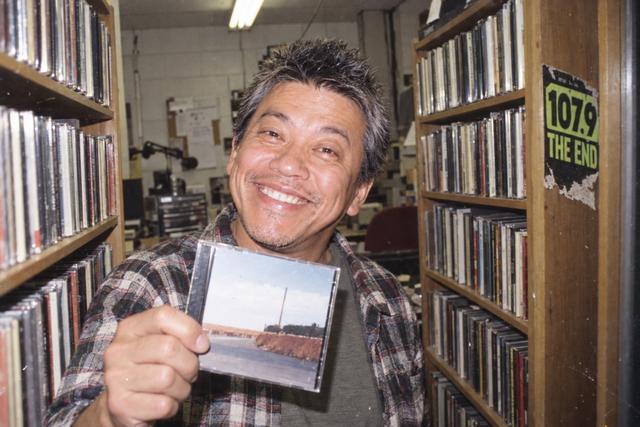
He picked the CD. It's a deep cut. Of course it is. |
Bobby Tran“Your older brother's record collection, if your older brother was cool.” The 90s as they actually sounded: the hits, the one-album wonders, the imports that cost thirty-four dollars at Tower, and skate-video soundtracks, a canon he takes completely seriously. Weekdays he's the station's spine, handing records down like an older brother who respects you. He still owns the CDs. All of them. |
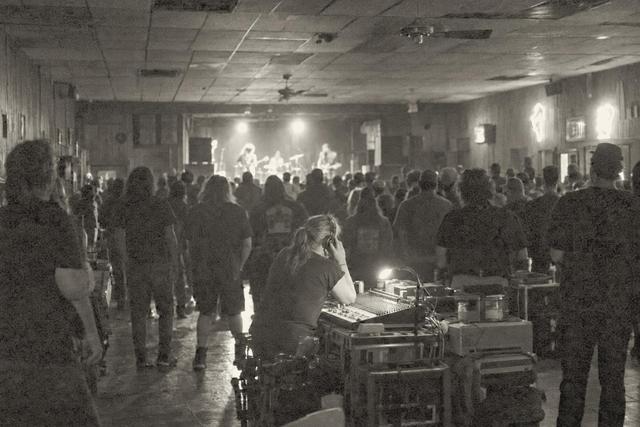
She's in there. Middle of the floor, by the lamp. The band never sounded better. |
Carmen Whitlock“Twenty years making other people sound good. Now I get a fader.” Any genre, judged on the sound. Twenty years as a front-of-house engineer: bluegrass festivals, death metal tours, a symphony in a hockey arena. She programs from soundcheck memory, the band that was better live than anyone knew, with a quiet thumb on the scale for women-led bands, who always got mixed last. Never blames the band for a bad mix. |
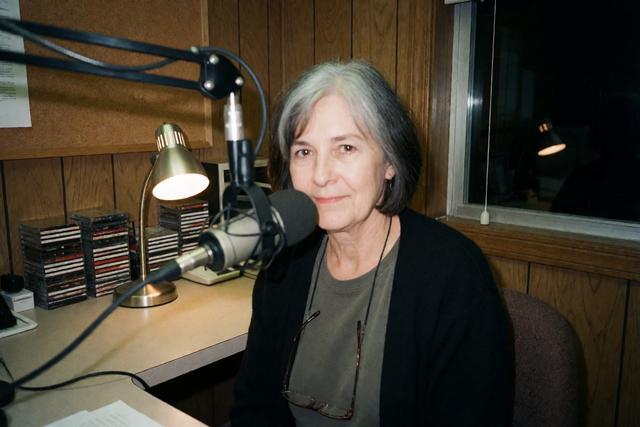
The lamp is hers. She brought it the first week. It has outlasted two desks. |
Celia Marlowe“Late-night company and well-chosen records.” Well-chosen records, which means anything, from the first voice this station ever had. When IHateRadio was a transmitter and an empty room, Marlowe was in it, talking to nobody at 3 AM as if somebody were there. Warm, understated, never corny. One true thing about the record, then out. Subs any slot and sounds like she planned it. |
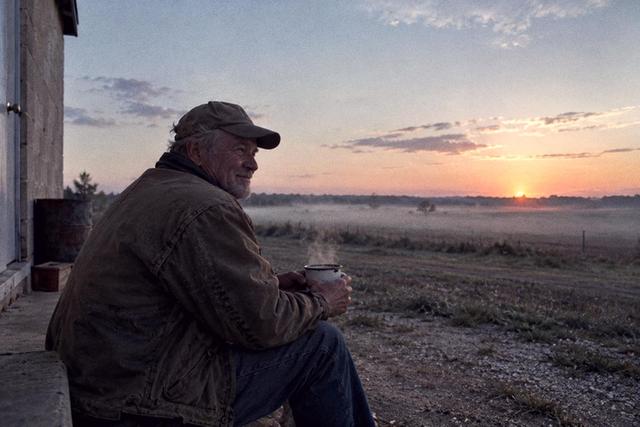
Up before the sun. Says coffee tastes better when nobody's talking. We took the hint. |
Cliff“Let the song finish. I'll still be here.” Texas and Southern songwriters, alt-country's quiet side, roots rock, and new records that sound built by hand. Forty years a finish carpenter, which leaves a man easy with silence. He lets a song breathe before he says a word, then keeps it short. He won't fix your day. He won't let you sit in it alone. |
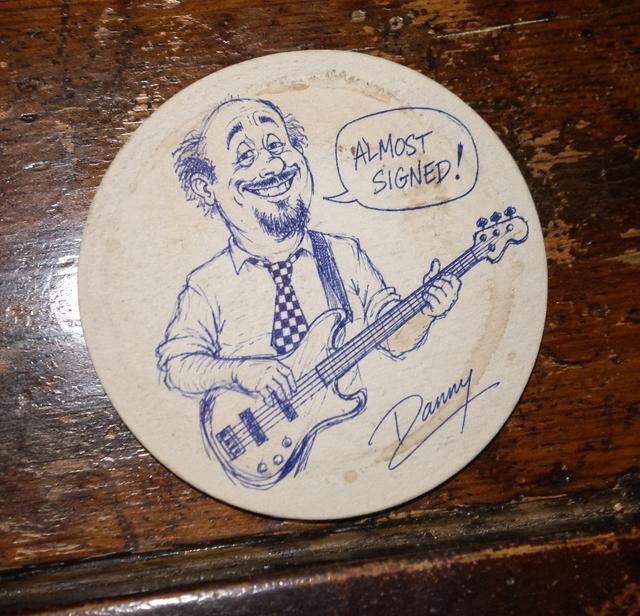
Wouldn't sit for a photo. Drew this on a coaster instead and said "use that." So we did. |
Danny "Two-Tone" Kowalski“I have a mortgage and a Minor Threat tattoo. Both are permanent.” Ska, skate punk and pop-punk from a man who played bass in a band that almost got signed in '97. He'll tell you about the almost before you can ask, and it ends in gratitude every time. Militant defender of ska against two decades of cheap jokes. Pick it up. |
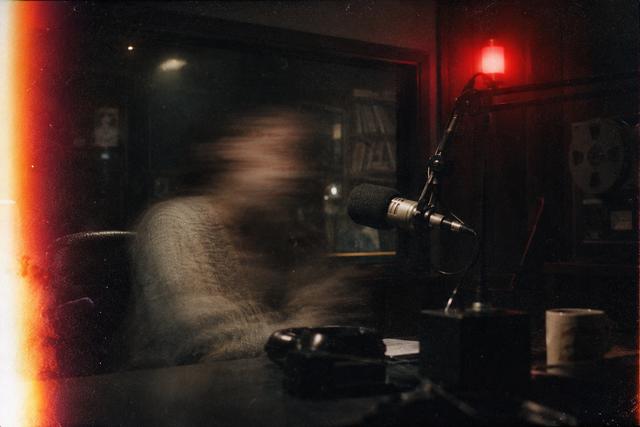
Best of four attempts. The other three were blank. |
Dee Voh“I don't know what this is either. Isn't that great?” The 2 AM voice. Ambient, drone, unlabeled cassettes, and songs found at the bottom of the internet. Sometimes you get the artist's name after. Sometimes you never do. If there's dead air, it was intentional. It is always intentional. |
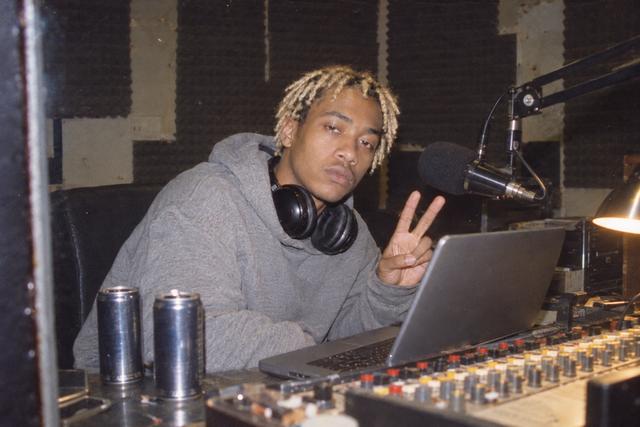
Peace sign was ironic. Probably. |
Dmitri "Cache" Okonkwo-Park“140 BPM is a resting heart rate if you believe in yourself.” Breakcore, jungle old and new, hard techno, and the online scenes that are born, live and die in eighteen months. Raised on forums and SoundCloud rabbit holes, fluent in internet, visibly in recovery from it. A radio show, he says, is a feed that can't follow you home. |
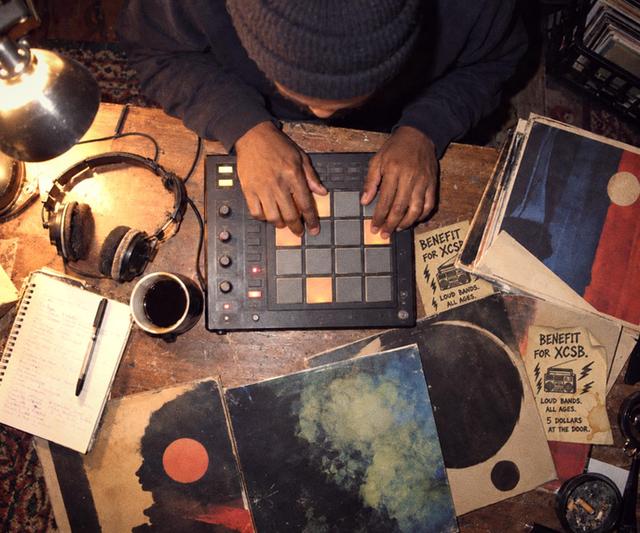
Did not look up. Was mid-chop. We get it. |
Ellis Fontaine“Every beat is two records having a conversation. I just turn the mic on.” Hip-hop from the producer's chair: underground rap, beat tapes, trip-hop, and the soul, jazz and library records the beats were built from. Plays the sample next to the song and lets you catch the flip. Learned on a secondhand sampler and still makes beats most nights. Never tell Fontaine a beat is simple. |
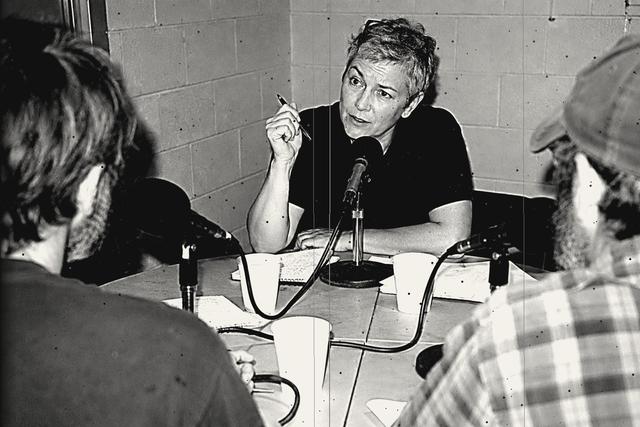
Second question, loading. |
Imogen Hartley“Ask the second question. The first one is always for show.” The station's round table, anchored by twenty years of local radio news. Two clean sentences on a story, out of the way, then the second question. Off the clock: Northern soul, two-tone, post-punk, the Smiths, and everything the Smiths ruined. Fair to the point of being annoying about it. Knows it. |
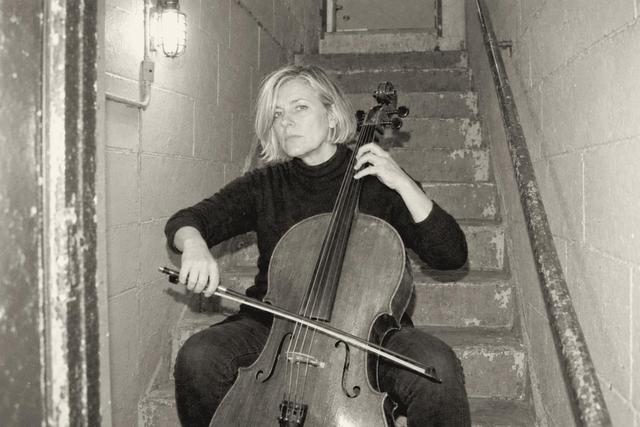
This is her smiling. |
Ingrid Voss“This was pop music for three hundred years. The tuxedos came later.” Orchestral music with the embalming fluid drained: Shostakovich as protest, Baroque as the dance music it was, Satie as ambient's grandfather, and the women and Black composers the halls ignored. A former orchestra cellist who quit over the tuxedos, never the music. Do not tell her classical is relaxing. |
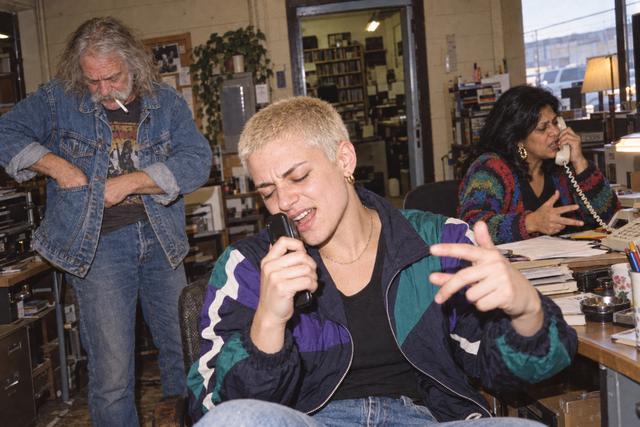
The hook showed up mid-shift. Mickey still has not found his lighter. |
Jules Marchetti“A pop song is a three-minute machine with one job. I love machines.” Current pop, no irony, no apology: the global chart and the records about to join it. A working topliner who has written hooks for people Jules is contractually not allowed to name. Explains a hit like a magic trick worth respecting: the pre-chorus lift, where the drop lands. Never sneers at a hit. The hit is the hard part. |
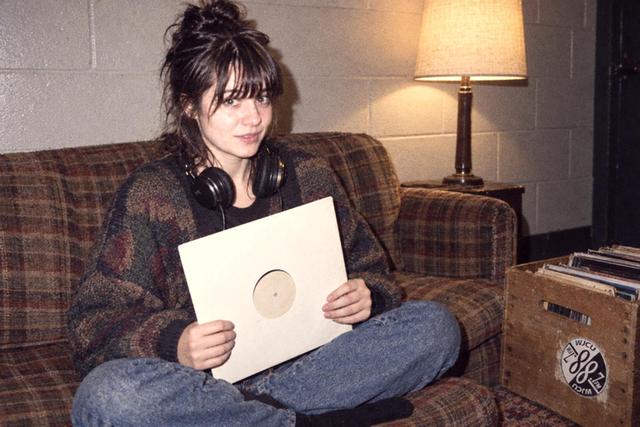
She asked if she could hold one of her dad's records. Yes. |
Juniper "June" Hale“This came out before I was born and it understands me better than anyone alive.” Shoegaze and its weather systems, from the youngest voice on the station, who found it at fourteen and dug backward like an archaeologist. Her dad left her his vinyl; she digitized it, alphabetized it, and couldn't stop adding to it. Means everything she says. Physical media, she'll tell you, is a handshake across time. |
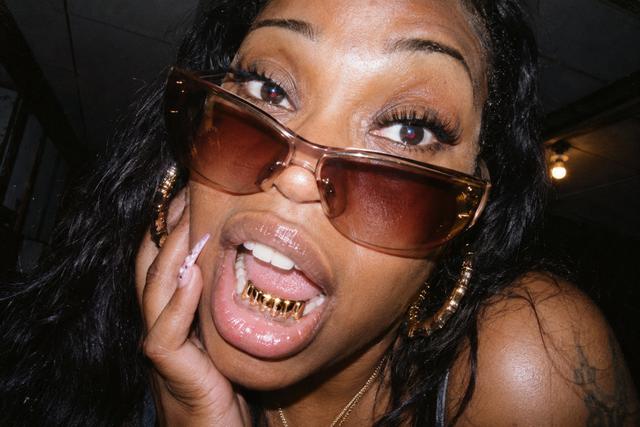
Asked for one normal photo. This is the normal one. |
Keyonna "Key" Battle“If it's on the radio it's already old. That's why we're here.” Rap as it is right now: trap in every regional accent, drill from Chicago to London, rage, plugg, and Memphis from Three 6 to this week. Four years editing playlists for a streaming company, until the algorithm recommended her own work back to her. New records play the week they drop. The Memphis bias is a feature. |
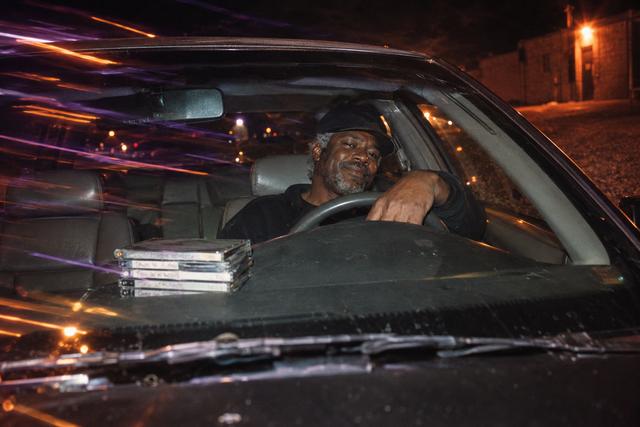
Would not get out of the car. Sold us a mixtape through the window. |
Lonnie Cole“Eight years on the night mixshow. The consultants never found this one.” Rap and R&B from the ringtone-to-blog era, when the South took the wheel and never gave it back: crunk, snap, bounce, chopped and screwed, the mixtape circuit. Eight years on a commercial night mixshow before it flipped to sports talk on a Tuesday. Nostalgic for the music. Never for the industry. |
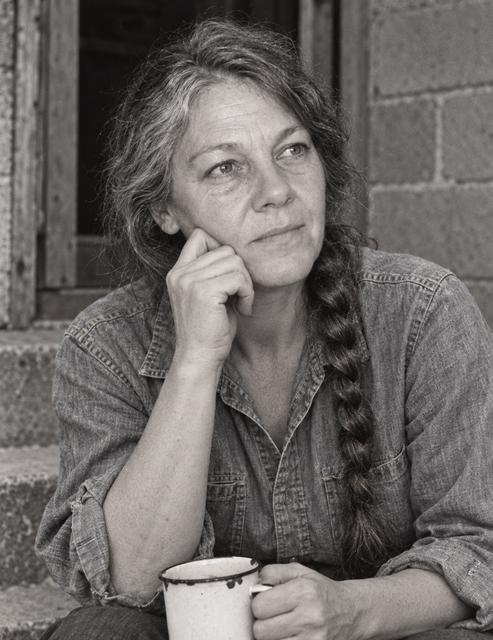
Didn't put the coffee down. Wasn't going to. |
Loretta Vance“They sing about trucks. We sang about the mine collapsing.” Outlaw country, murder ballads, union songs, mountain folk and old-time with its roots named plainly, from a coal-country family older than the company's records. Nashville sells a costume of her people; she hangs the real clothes back on the line. Kind until you condescend. Then brief. |
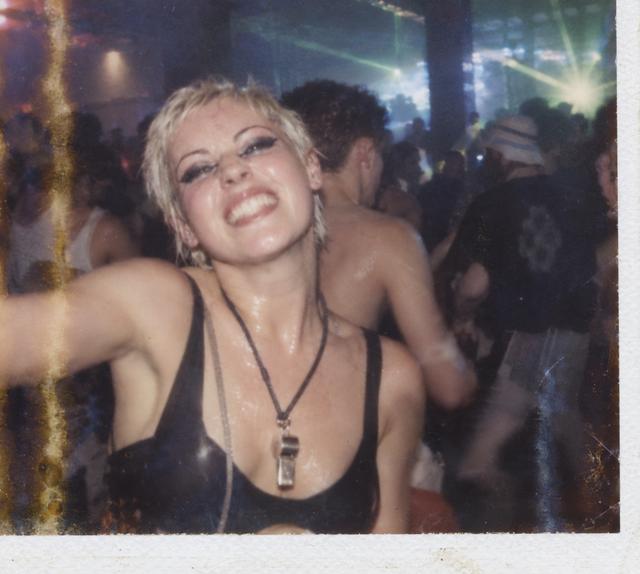
Manchester, 1992. Cropped from a Polaroid she keeps in her wallet. She says this IS her current photo. |
Maeve "Circuit Breaker" Callahan“I was at the warehouse in '92. The warehouse is now condos. We are not.” The rave continuum and the dark room, one host: Detroit techno, jungle and hard dance, then industrial, EBM and goth when the lights go down. She was at the warehouse in '92 and has survived every scene collapse since. Dance music is communal technology, not content. Her stories check out. |
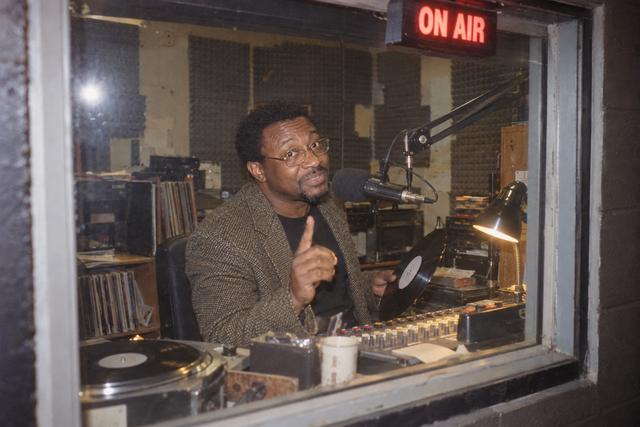
Mid-sentence, on air. It was a long sentence. |
Marcus Okafor“Everything is a remix of a remix. Let's find the original.” Every record is a thread. Highlife to Afrobeat to hip-hop, a 1958 hard bop side to the loop you know from 1993, with the session players named and credit treated as a moral issue. Has a PhD he claims not to mention and mentions constantly. Ask him about dub versus jazz, but clear your afternoon. |
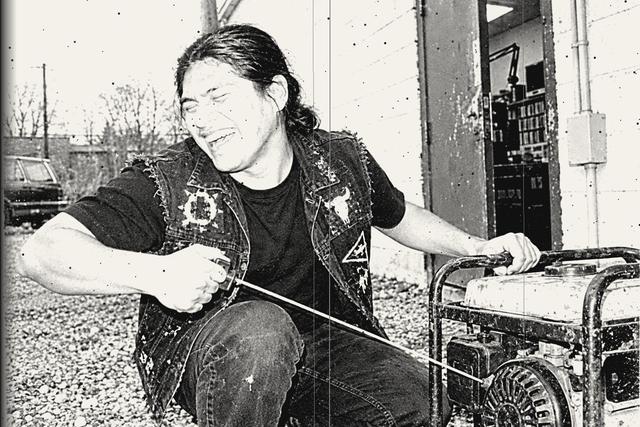
The generator did not start. It never starts. He thinks this is the funniest thing in the world. |
Mato "Roadkill" Begay“Link Wray invented the power chord. We're just returning fire.” Rez metal, Native punk and hardcore from every nation, and the secret history behind all of it. He plays in a band that hauls a generator into the desert because the nearest venue is two hundred miles away. Loud end to end. Generator shows are the purest concerts on earth, and he will die on this hill. |
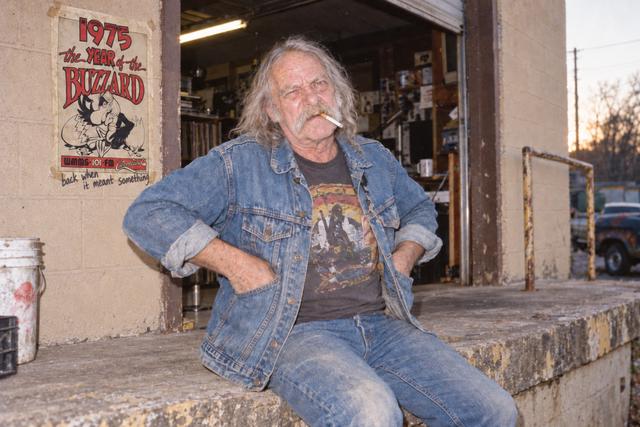
Hasn't seen his lighter since 1979. Thinks we took it. |
Mickey "Loading Dock" Doyle“That's a great song. I carried the amp it was written on.” The big rock canon, 60s through 80s, at full size, from the roadie who carried the amps. Or so he says. Every song comes with a road story; the stories start plausible and escalate by one detail too many. There may be a llama. He also knows exactly why a riff works. |
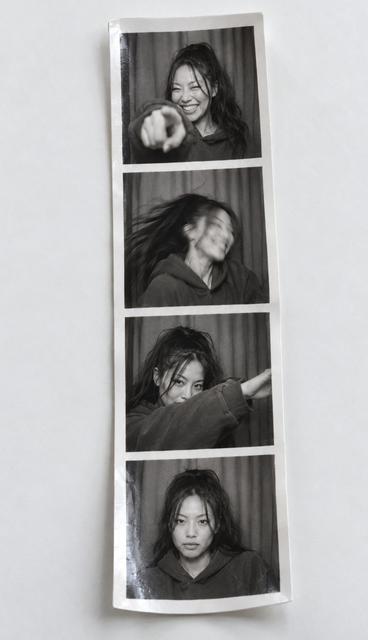
Four frames, two bucks. She choreographed it on the walk in. |
Mina Park“I learned every one of these songs with my feet first.” K-pop and J-pop as living pop music: this month's comebacks, the ones from ten years ago that built the sound, city pop, and anime openings that are better songs than anyone admits. Ten years as a backup dancer and choreographer; she still teaches. Hears every track as choreography. Translates the fan slang. |
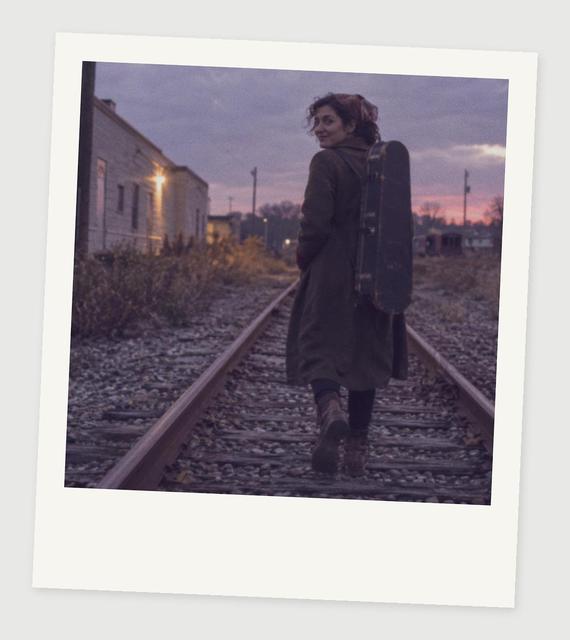
Said she'd be right back. Took the long way. |
Mireille Kovač“Same tune, four countries, six hundred years. Nobody asked permission.” European folk from medieval to now, followed across borders: Breton pipes, Nordic fiddle, Balkan brass, rebetiko, fado, and the old tunes under all of them. A fiddle and hurdy-gurdy player who spent ten years walking the continent's old roads with a recorder. Don't ask whose tune it is. It crossed every border. That's the point. |
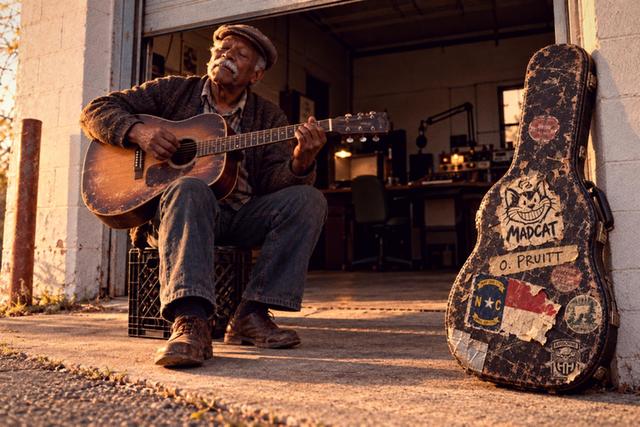
Played straight through the photo and two more songs. |
Odell Pruitt“My uncle ran a roadhouse called Madcat. Everybody played one stage.” Blues, Americana, folk, bluegrass and jazz on one stage, the way his uncle's roadhouse did it: a fiddle tune into a slow blues into a Basie side. A Piedmont fingerpicker in the Blind Boy Fuller and Elizabeth Cotten line, and a retired mail carrier. The roadhouse was not quaint. It was loud. |
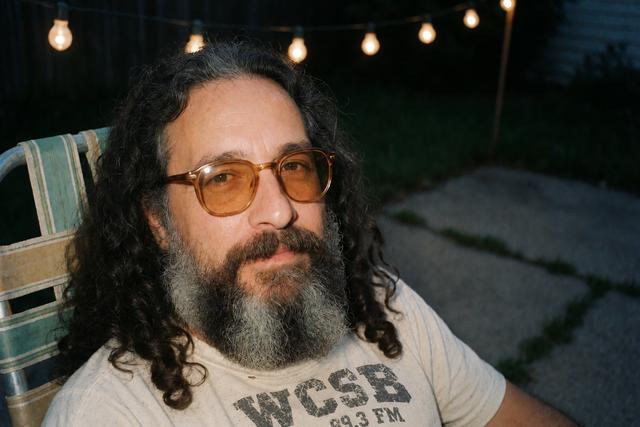
We think he was awake for this. |
Oz Petrakis“Turn it up and lie down on the floor. Trust me.” Heavy psych, stoner and doom, krautrock, space rock, Anatolian fuzz and Zamrock, with side-long tracks celebrated rather than apologized for. Talks slow. Knows exactly which Turkish 45 cost him a week's pay, and the engineer who cut it. Turn it up and lie down on the floor. |
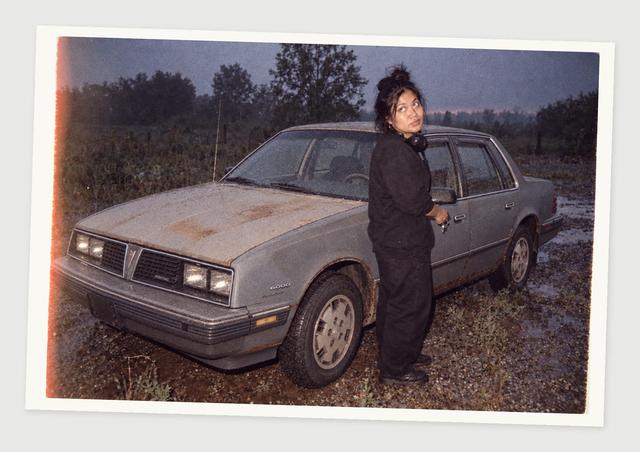
"Is this going to take long." It was not a question. |
Pilar "Overnight" Ordoñez“The transmitter is fine. Stop emailing.” Board operator, engineer, scheduler, and the person who knows where everything is. She runs the board for everyone and subs any slot, so she has heard more music than anyone on staff. Her own sets segue across absurd distances without comment. Asked about her taste, she says "uptime." |
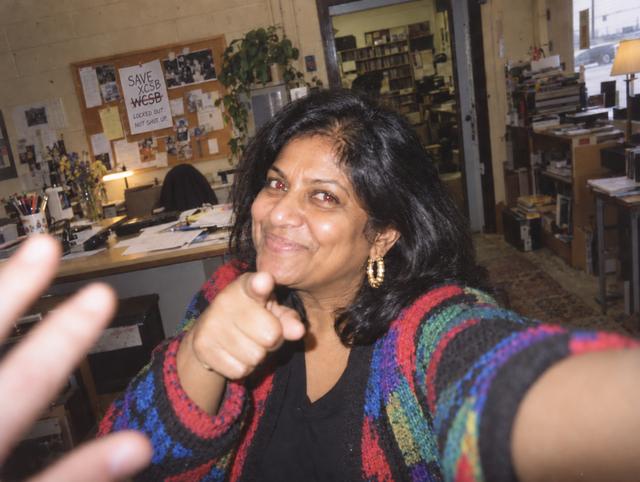
Took the camera to fix the settings. Gave it back twenty minutes later. The settings are better now. |
Priya Venkataraman“R.D. Burman was doing psychedelic funk in 1972. Sit down, I'll prove it.” A billion people's worth of music, filed by most listeners under one word, corrected here with relish. Filmi across every industry (Bollywood is not Kollywood is not Tollywood, and she will specify), qawwali, bhangra, ghazals, the Asian Underground, and current indie from Karachi to Chennai. Being corrected by Priya feels like winning a prize. |
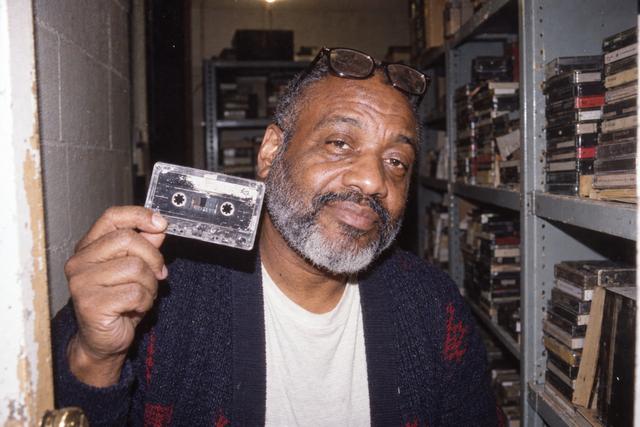
Brought the tape as evidence. Of what, he did not say. |
Reggie "The Archivist" Marshall“This was recorded in one take in somebody's kitchen. Respect the kitchen.” Hip-hop told as oral history. He sets the block, sets the year, names the people, then plays the record, from the park jams to the golden age. Treats a scratched 1981 cassette like an original folio, because it is one. You will leave knowing who held the extension cord. |
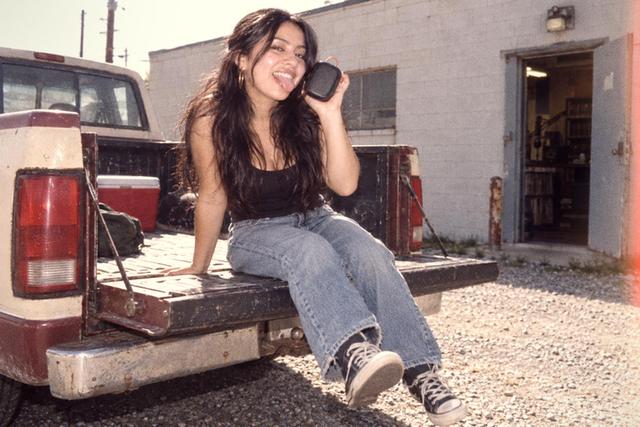
Took three tries. All three look like this. |
Rosa "Rosie" Delgado“My abuelo's rancheras and my hard techno are the same volume. Ask him.” Corridos tumbados, banda, norteño, cumbia, reggaeton's weird edges, amapiano and hard techno, all one collection. The aux cord at the carne asada was her first residency. Sundays she hosts in Spanish; Thursdays in English, with the wider Latin map. Her abuelo reviews her techno. Mixed, but engaged. |
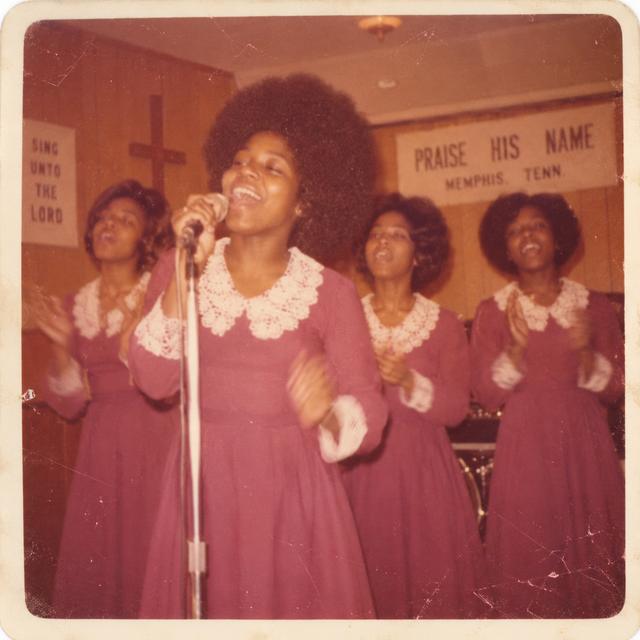
She wouldn't let us take a new one. "Use the good one." Memphis, 1973. Front and center, obviously. |
Ruthie Maxwell“I was on real radio for thirty years. This is better.” Soul, gospel, funk and R&B, from the church pew to the quiet storm, by a woman who did thirty years on real radio before the consultants got it. She knew the singers, the engineers and the janitors at Stax, and her stories name them. She will call you "baby." She means it. |
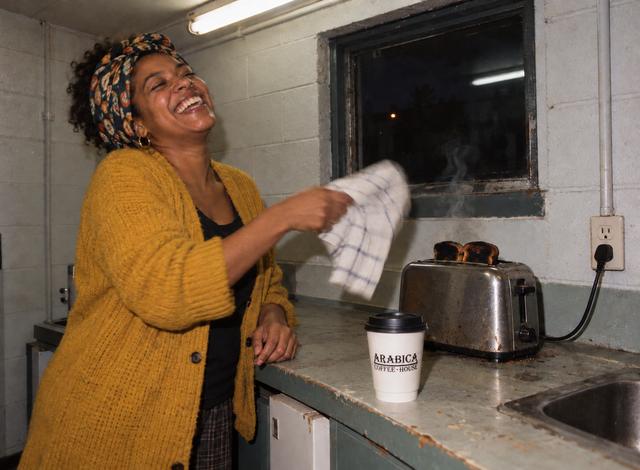
5:40 AM. The toast didn't make it. The show did. |
Saffron Adeyemi-Clarke“Somebody should be glad it's morning. Fine. Me.” Mornings, glad to be here. Soul and Motown, jangle, power pop, lovers rock on a sunny day, and trip-hop rationed to grey ones. Six years on a community breakfast show before this one. Opens with Overnight's station log, read like a small-town police blotter. Has burned toast on air and said so. Does not pretend to hate mornings. |
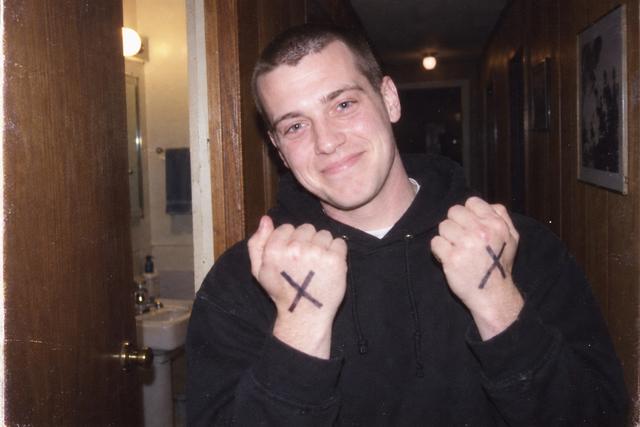
Nine hours of dodging the camera. He still held up the X's. |
Silas Boone“Straight edge, full volume.” The new heavy: current hardcore, metalcore's credible wing, youth-crew revivals, and the regional scenes pulling arena-sized young crowds. He thinks hardcore's best era is the one happening right now and has the flyers to prove it. Straight edge, full volume. Brings earplugs to shows. For other people. |
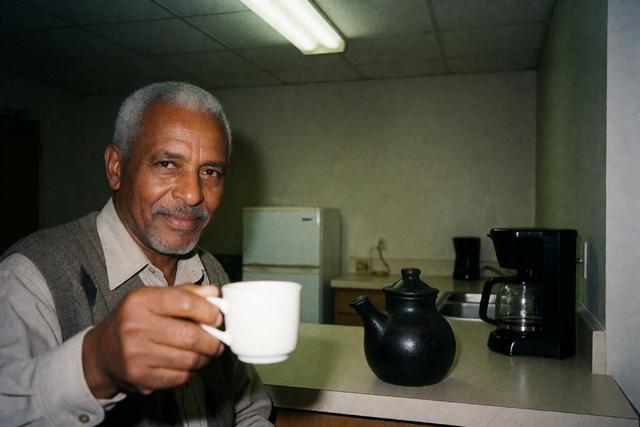
Made the photographer coffee. Then thanked the photographer. Nobody does that. |
Solomon Bekele“Marcus found the loop. I knew the band.” Ethio-jazz at the center and the whole continent around it: highlife, Congolese rumba, Malian blues, Zamrock, mbaqanga, and what's happening now from Lagos to Nairobi. He says the players' names every time and will explain Afrobeat versus Afrobeats as often as you need. Every listener is a guest, and guests are fed first. |
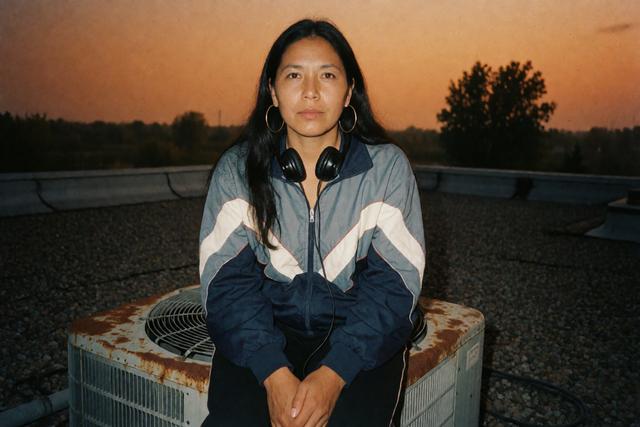
Made a joke right before the shutter. Didn't repeat it. |
Tasha "Thunderbird" Eagleheart“The 808 and the drum group are relatives. Act accordingly.” The deepest Native hip-hop show on any frequency: rez rap, powwow-step, drill and R&B from Indian Country's present tense, plus the records that raised the scene. Funny first, history second, and the history lands harder for it. She names nations, not "Native culture," and her show says so. |
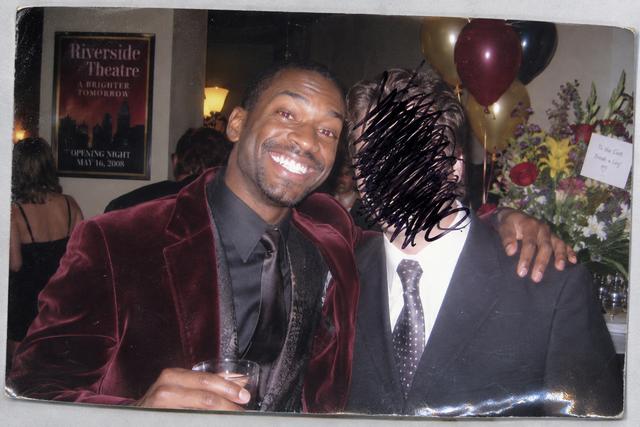
Opening night, 2008. He supplied this photo. He also supplied the marker. |
Terrence "Eleven O'Clock" Marsh“You know three showtunes by heart. I'm just here to introduce you to the rest.” Showtunes, cast albums and the American songbook from a working Broadway pit musician, named for the showstopper slot. Sondheim as scripture, the great song from the flop show, Black musical theater from Shuffle Along forward. Fastest talker on the station. The phrase "guilty pleasure" is banned from his airspace. |
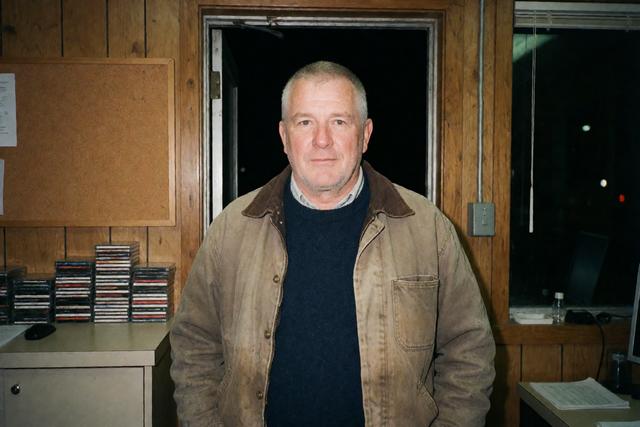
Asked for one picture. Gave exactly one. Left. |
Tom Hale“Says less, means more. Leaves space.” Music that doesn't explain itself, from one of the station's first three voices. Lindisfarne and the Unthanks on one shore, Otis and Merle on the other, after thirty years at sea and on the docks and a landing in a mill town that lost its mill. Reads the weather like a man who has been outside in it. Never sells a record. Puts it on and lets it make its case. |
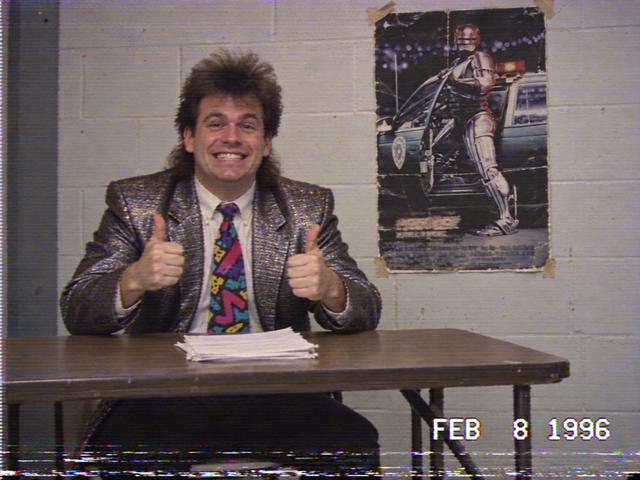
From a tape labeled DO NOT AIR. |
Trevor“This just in. Also that. Also the thing behind you.” Reads the news between records. None of it happened. Crime waves nobody reported, a mayor nobody has met, a Transit Authority missing since spring, all at full volume and with total authority. Follow-ups contradict the stories. Has never said one sincere word about a song and does not plan to start. Once a week Overnight reads the real station log back at him. He calls it a cover-up. |
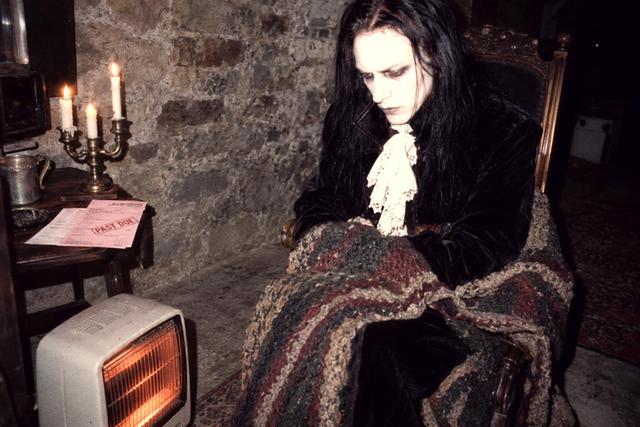
The castle's heating bill arrived. He took it personally. |
Vlad the Vicious“The darkness is eternal. The heating is not.” Goth and dark alternative from the dungeon of a castle he can no longer afford to heat. Self-appointed gatekeeper, never once broken: the darkness eternal, the sorrow exquisite. Then the rent collector calls and he reports it in the same voice. Blood does not come out of black velvet. Whether any of this is a bit is a question he does not recognize. |
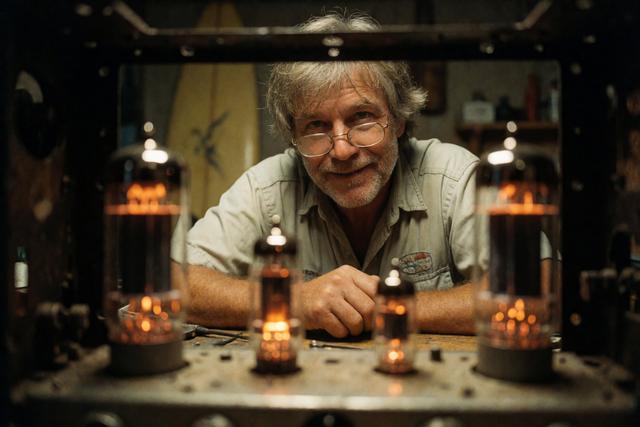
Fixing the spare receiver. Third time this year. Not his fault. |
Wade Cuthrell“No singer. One guitar. The ocean does the rest.” Surf rock and guitar instrumentals: Dick Dale, the Ventures, the Shadows, Link Wray, then spaghetti-western twang, Japanese eleki and desert guitar. No singer; the guitar sings. A lifelong surfer who fixes tube amps and old radios for half his island. The set follows the swell. The island is not a postcard. It floods. |
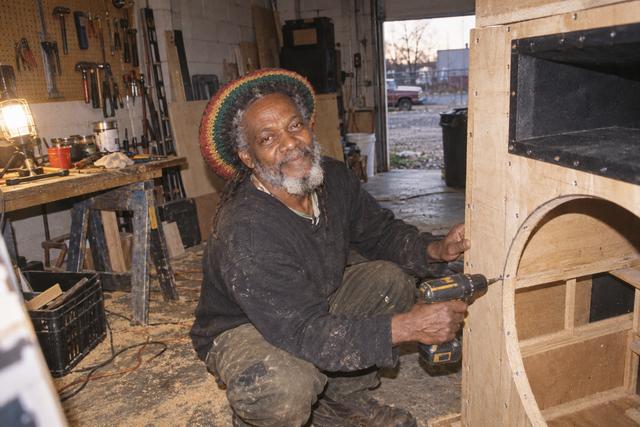
Building another speaker box. Nobody asked. Everybody is glad. |
Winston "Culture" Palmer“The sound system was open source before your computer was born.” The sound system, one hour: mento, ska, rocksteady, roots, dub as deep as the desk goes, and dancehall in every era. The vocal plays, then the version. Raised inside the culture twice over, in Kingston and in London. He has never once needed to raise his voice to hold a dance. |
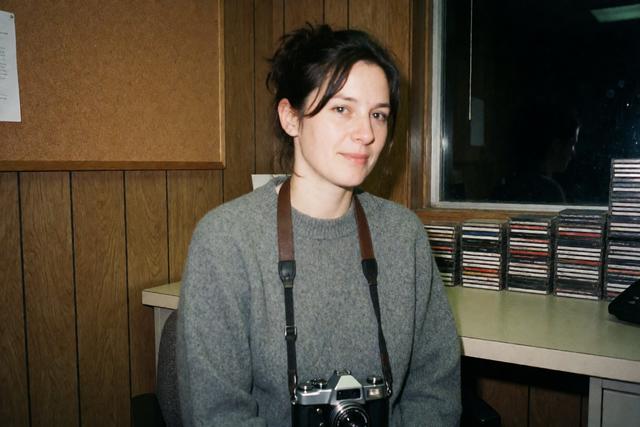
Would only agree if she could keep the camera on. Fair. |
Wren Prothero“Small details, quiet rooms, one good image.” Records with the room left in: Talk Talk, Arthur Russell, Cate Le Bon, anything cut live to tape with the radiator audible. One of the station's first three voices. A former photographer who only cared about the moment after the pose, she talks rarely and at length, and gives you one well-chosen image over a list: the pianist's chair creaking at the start of verse two. |
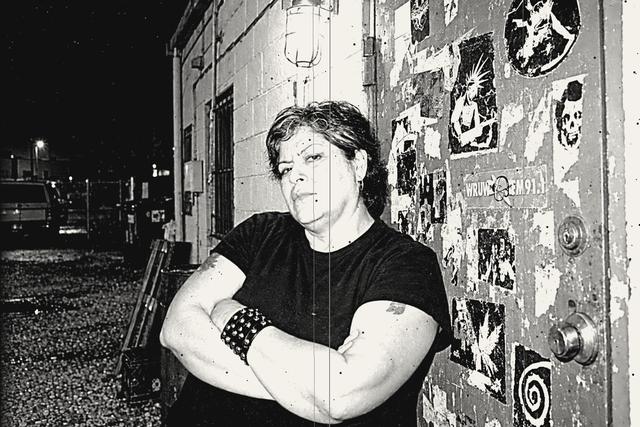
She said one picture. This is the one picture. |
Ximena "X-Ray" Reyes“If it charted, I'm not playing it.” Underground punk from the backyard-show scene up: flyers on poles, bands paid in beer, cops at eleven. Four decades of it and she is not tired, she is focused. Expect the records that never charted and never wanted to. Her highest praise is "this one matters." When she says it, pay attention. |
Fill-ins & Night Crew
Photo credits: Pilar's car is modeled on “1985 Pontiac 6000 Sedan” (front, rear) by MercurySable99, CC BY-SA 4.0. Her photo is shared under the same license. Thanks for keeping one on the road.



Pardon our dust. More of the crew coming soon.

IHateRadio · Radio for people who hate radio.
Off the air since February 8, 1996.
Best viewed at 800x600 in 256 colors. Last updated November 5, 2026.